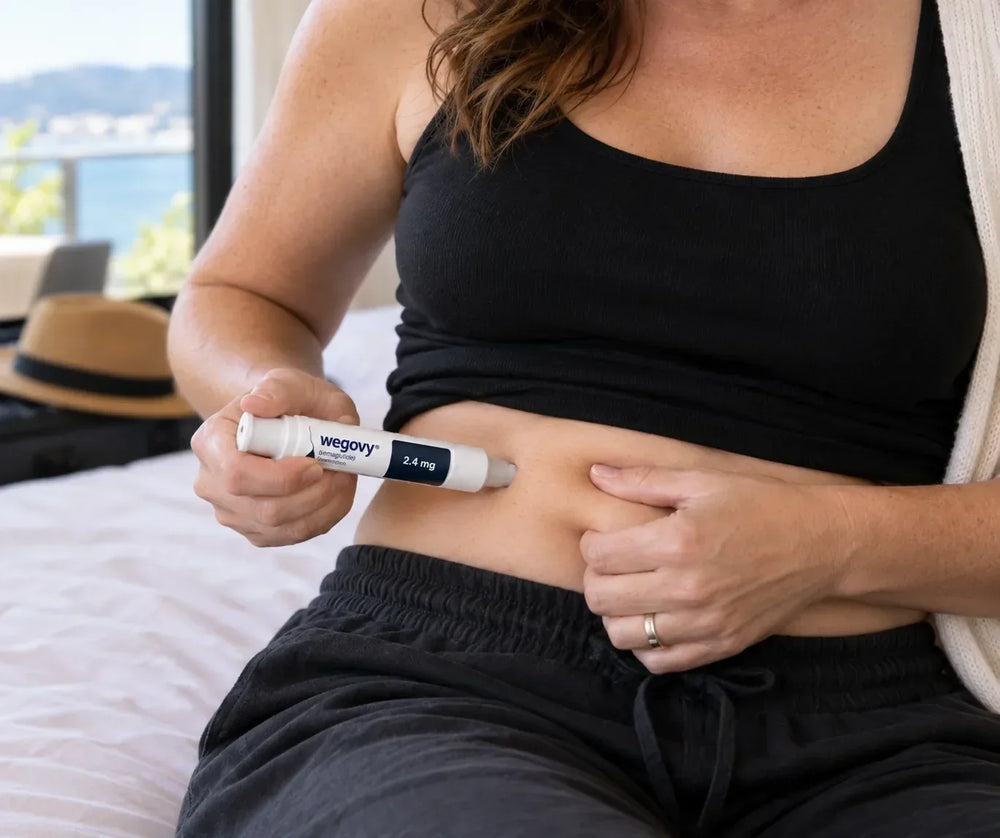
One of the most common questions among people taking Wegovy, Mounjaro or Zepbound is surprisingly simple:
“How do I know when it’s actually time to increase my dose?”
Patient discussions show the same dilemma repeatedly. Someone is still losing weight, but more slowly. Hunger is returning. Food noise is creeping back. Or the medication seems to work beautifully for the first few days after an injection but feels weaker toward the end of the week.
The answer isn't necessarily “move up as soon as you can.”
A higher dose isn't automatically a better dose
GLP-1 and GIP/GLP-1 medications are intentionally increased gradually. For example, Zepbound starts at 2.5 mg weekly for four weeks, moves to 5 mg, and subsequent increases can occur in 2.5 mg increments only after at least four weeks on the current dose. Importantly, Lilly says clinicians should consider both treatment response and tolerability when selecting a maintenance dose.
Wegovy also follows a gradual escalation schedule. Novo Nordisk notes that if a dose isn't well tolerated, escalation can be delayed rather than automatically moving higher.
So reaching the next available dose isn't itself a reason to take it.
Signs it may be worth discussing a dose increase
Across GLP-1 patient communities, three concerns come up again and again when people start thinking about moving up:
1. Your progress has genuinely stalled. A week or two without weight loss isn't necessarily a plateau. Body weight naturally fluctuates. What matters more is the trend over several weeks.
2. Hunger and food noise are consistently returning. Normal hunger doesn't mean your medication has stopped working. But if persistent cravings, food preoccupation or difficulty controlling portions have returned after previously improving, that's useful information to bring to your prescriber.
3. Your current dose is no longer meeting the treatment goal. For Mounjaro used for type 2 diabetes, for example, Lilly states that additional doses are available when additional glycemic control is needed.
Interestingly, these are also the patterns people repeatedly describe in current patient discussions: not simply “I felt hungry today,” but a sustained combination of returning appetite, food noise and stalled progress.
When might you not want to increase yet?
If you're still steadily progressing, feeling satisfied after reasonable portions and tolerating the medication well, there may not be an urgent reason to chase a higher dose.
Likewise, feeling hungrier on day six or seven doesn't automatically mean your dose has failed. This comes up frequently in patient discussions, where people sometimes confuse normal hunger with loss of medication effectiveness.
And if you're already struggling with nausea, vomiting, constipation, reflux or difficulty eating enough, increasing the dose deserves particular caution. Dose escalation is deliberately gradual partly to improve gastrointestinal tolerability.
Don't judge your dose by appetite alone
One of the biggest misconceptions surrounding GLP-1 medications is that “working” means never feeling hungry.
Hunger is normal.
Instead, look at the bigger picture:
Weight trend + portion control + satiety + food noise + metabolic goals + side effects.
If several of those have meaningfully worsened for a sustained period, that's a much stronger reason to discuss increasing your dose than simply noticing hunger before dinner.
So, when should you up your GLP-1 dose?
A useful question to ask yourself is:
“Is my current dose still helping me achieve my treatment goals without unacceptable side effects?”
If the answer is yes, a higher dose may not necessarily offer an advantage right now.
If progress has genuinely stalled and appetite control or other treatment goals are consistently deteriorating—after you've spent the required time at your current dose—it may be time to discuss the next dose with your healthcare professional.
And if your current dose is already causing significant side effects, the conversation may need to be about staying at the same dose or delaying escalation, rather than increasing it.
Ultimately, dose changes should be made with your prescriber rather than by copying someone else's titration schedule. Two people taking the same medication can respond very differently.
_____________________________________________________________________
References:
Eli Lilly — Zepbound dosing schedule