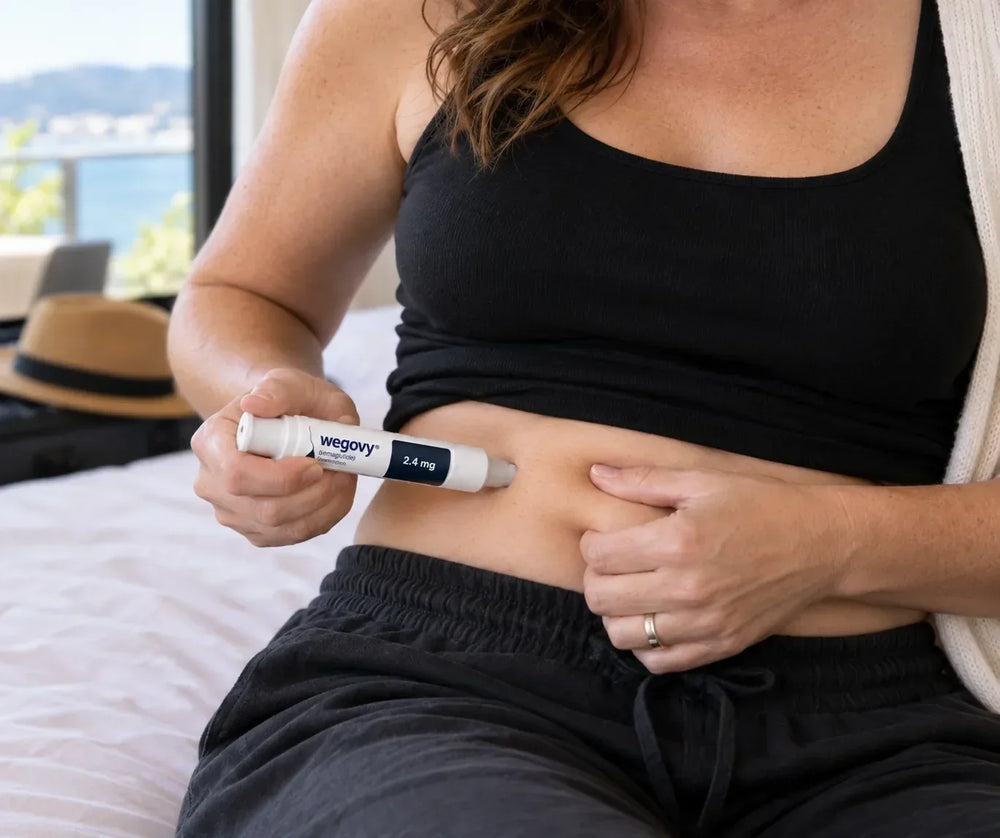
If you are planning on going on a cruise with Ozempic, Mounjaro, Wegovy, Zepbound, or another temperature-sensitive GLP-1 or insulin medication, do not assume the refrigerator or minibar in your cabin is suitable for medication storage.
On many cruise ships, cabin “refrigerators” are actually beverage coolers or minibars, and cruise lines may specifically warn that they are not intended to maintain medication at a required temperature.
For example, Norwegian Cruise Line states that cabin minibars are not suitable for temperature-sensitive medicine, although medication refrigeration may be available through the medical center and guests may bring a small personal medical cooler.
Carnival gives similar guidance: some staterooms have minibar units designed for beverages, but these should not be used for medications with specific temperature requirements. Carnival instead offers limited portable medical coolers or medical-center storage.
Ask for a medical refrigerator before you sail
Some cruise lines can provide dedicated refrigeration if requested in advance.
Royal Caribbean lists a medical refrigerator among equipment that may be requested before sailing and recommends providing advance notice to improve availability.
Policies vary not only by cruise line, but sometimes by ship and cabin category. Norwegian, for example, states elsewhere that refrigerators suitable for insulin are available in most staterooms, with certain studio-category exceptions.
The safest approach is therefore to contact the cruise line's accessibility or special-needs department before departure and ask specifically:
- Is the cabin refrigerator suitable for medication storage?
- What temperature range does it maintain?
- Can a dedicated medical refrigerator be requested?
- Is medication storage available through the onboard medical center?
- Is freezer access available if you need to recharge a medication cooler?
What about GLP-1 medications?
Whether your GLP-1 actually needs continuous refrigeration during the cruise depends on the specific medication and presentation.
Ozempic, Mounjaro, Wegovy, and Zepbound have different manufacturer-approved storage instructions and room-temperature allowances.
Before sailing, check the current instructions for your exact medication rather than assuming every GLP-1 pen needs to remain refrigerated throughout the trip.
This matters because a seven-day cruise may fall within the permitted room-temperature period for some medications, while a longer cruise or multiple unused doses may require a different storage plan.
Bring your medication in your carry-on
Do not place essential GLP-1 medication in luggage that disappears with porters at embarkation.
Your checked cruise luggage may not reach your cabin for several hours.
Keeping medication in your carry-on means you maintain access and better control over temperature during:
terminal arrival → security → boarding → waiting for your cabin → luggage delivery
Royal Caribbean specifically recommends carrying medications onboard in hand luggage rather than checked luggage.
A personal medication cooler can solve the gap
A compact medication cooler like the Eurolabx travel cooler case can be particularly useful on:
- embarkation day
- transfers between airport and cruise terminal
- long shore excursions
- hot-weather ports
- the journey home
Both Norwegian and Carnival explicitly permit small personal coolers for medical items, subject to their size requirements.
If you use a frozen cooling element, remember that many GLP-1 medications also carry warnings against freezing. The medication should be protected from excessive heat without being pressed unnecessarily against a deeply frozen surface.
Don't forget shore excursions
Your cabin refrigerator solves only part of the problem.
On an eight-hour Caribbean excursion, your medication may instead be exposed to:
- hot buses
- direct sunlight
- beaches
- outdoor tours
- bags left in warm environments
If you need to carry medication off the ship, plan for the temperature conditions of the excursion as well as those inside your cabin.
Bottom line
Yes, cruise ships may offer refrigeration for medications—but do not assume your cabin minibar is suitable.
Before traveling with GLP-1 medication on a cruise:
- Check the manufacturer storage requirements for your exact medication.
- Ask the cruise line whether your cabin has a medication-suitable refrigerator.
- Request medical refrigeration in advance if necessary.
- Carry medication onboard with you rather than putting it in checked cruise luggage.
- Plan separately for embarkation day, shore excursions, and the trip home.
A little preparation before sailing can eliminate one of the biggest uncertainties about traveling with GLP-1 medications on a cruise.
_____________________________________________________________________
References:
Norwegian Cruise Line: Onboard Medical Care & Health Services
Royal Caribbean: Guest Health, Safety, and Conduct Policy
Carnival: Non-Stocked Mini Bar Unit