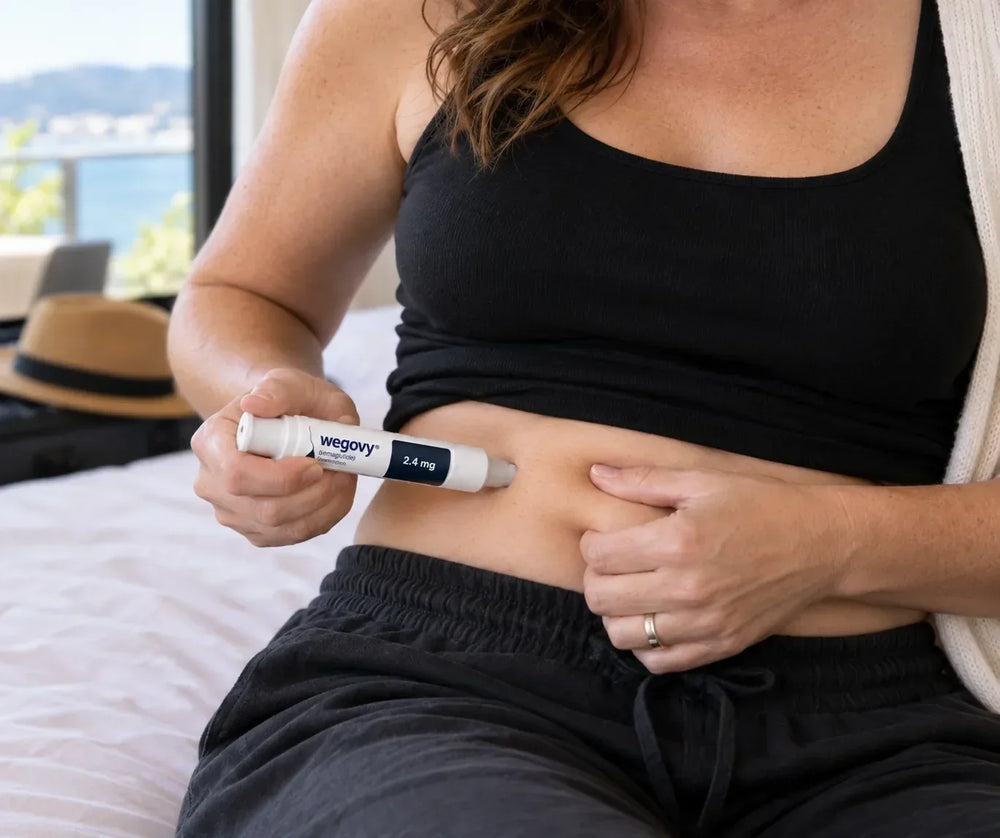
If you’re traveling with Zepbound, you may not need to keep your medication refrigerated every minute of the trip.
For many travelers, the more useful question is:
Should I keep Zepbound refrigerated throughout my trip, or use its permitted room-temperature storage window?
That decision can simplify flying, hotel stays, road trips, and vacations—but it needs to be made carefully.
How long can Zepbound stay out of the refrigerator?
Lilly says Zepbound single-dose pens and vials should normally be refrigerated at 36°F to 46°F (2°C to 8°C).
If needed, they can be stored at room temperature up to 86°F (30°C) for up to 21 days.
The important detail is this:
Once Zepbound has been stored at room temperature, Eli Lilly says it should not be returned to the refrigerator.
It should also be discarded if not used within 21 days after removal from refrigeration. Zepbound should never be frozen.
For a short trip, refrigeration may not always be necessary
Suppose you are leaving for a one-week vacation and only need one Zepbound dose while away.
If the medication can remain below 86°F for the entire trip, Eli Lilly's room-temperature allowance may make continuous refrigeration unnecessary.
That can eliminate several travel complications:
- refreezing gel packs at hotels
- finding refrigerators during layovers
- worrying about hotel minibar temperatures
- carrying a large cooling system for a short trip
But this works only if you can reliably prevent the medication from becoming too warm.
A summer car, sunny beach bag, or hot taxi can easily create conditions very different from normal room temperature.
When a Zepbound travel cooler case makes more sense
A travel cooler case becomes more useful when your itinerary makes temperature exposure unpredictable.
Examples include:
- long airport delays
- hot-weather destinations
- road trips
- extended outdoor transfers
- cruises and excursions
- travel where air conditioning is unreliable
In these situations, the cooler may be protecting Zepbound from heat exposure, not simply trying to keep it refrigerator-cold.
That distinction matters.
Avoid switching repeatedly between cold and room temperature
Travelers may be tempted to do this:
refrigerator → carry-on → hotel refrigerator → sightseeing → refrigerator again
But Eli Lilly's guidance says that if Zepbound has been stored at room temperature, it should not be returned to the refrigerator.
That makes it useful to decide on your storage strategy before you leave.
For example:
Strategy 1: Maintain refrigerated storage
This may make sense if you are carrying medication that needs to remain refrigerated for a longer future period.
Use an appropriate travel cooler during transit and arrange reliable refrigeration at your destination.
Strategy 2: Use the 21-day room-temperature allowance
For a shorter trip, you may decide to remove the dose from refrigeration and keep it within Lilly's permitted room-temperature range until use.
Once you take that approach, track when the medication left refrigeration.
Flying with Zepbound
When flying with Zepbound, keep the medication in your carry-on whenever practical.
This keeps it accessible during delays and gives you more control over temperature than checked baggage.
For U.S. departures, TSA permits medically necessary medications and associated supplies under its medical screening procedures.
For international travel, also check your destination country's medication and import rules.
Heat isn't the only risk
Trying to keep Zepbound cold can create the opposite problem.
As per Eli Lilly:
- do not freeze Zepbound
- do not use it if it has been frozen
- keep it in its original carton to protect it from light.
If you use a frozen gel pack, avoid unnecessary direct contact between the Zepbound pen and the frozen surface.
The Eurolabx travel cooler case provides a thermal barrier or separation can help protect against both sides of the problem:
too hot ← appropriate protection → too cold
A simple Zepbound travel decision guide
Before you leave, ask yourself:
How long will I be away?
If the trip is comfortably within the 21-day room-temperature period, refrigeration may not always be necessary.
Could temperatures exceed 86°F?
If yes, some form of temperature protection may be useful.
Am I keeping the medication refrigerated for future use?
If yes, plan continuous appropriate cooling and reliable destination refrigeration.
Will I have a refrigerator or freezer at my destination?
Know this before relying on a reusable cooling system.
When did the medication leave refrigeration?
If you are using the room-temperature allowance, track the date.
Bottom line
For many people traveling with Zepbound, the biggest decision is not simply which cooler to buy.
It is choosing between:
maintaining refrigerated storage
or
using Zepbound's manufacturer-approved room-temperature window.
Planning around those rules can make traveling with Zepbound considerably simpler while helping you avoid both excessive heat and unnecessary freezing exposure.
_____________________________________________________________________
References: